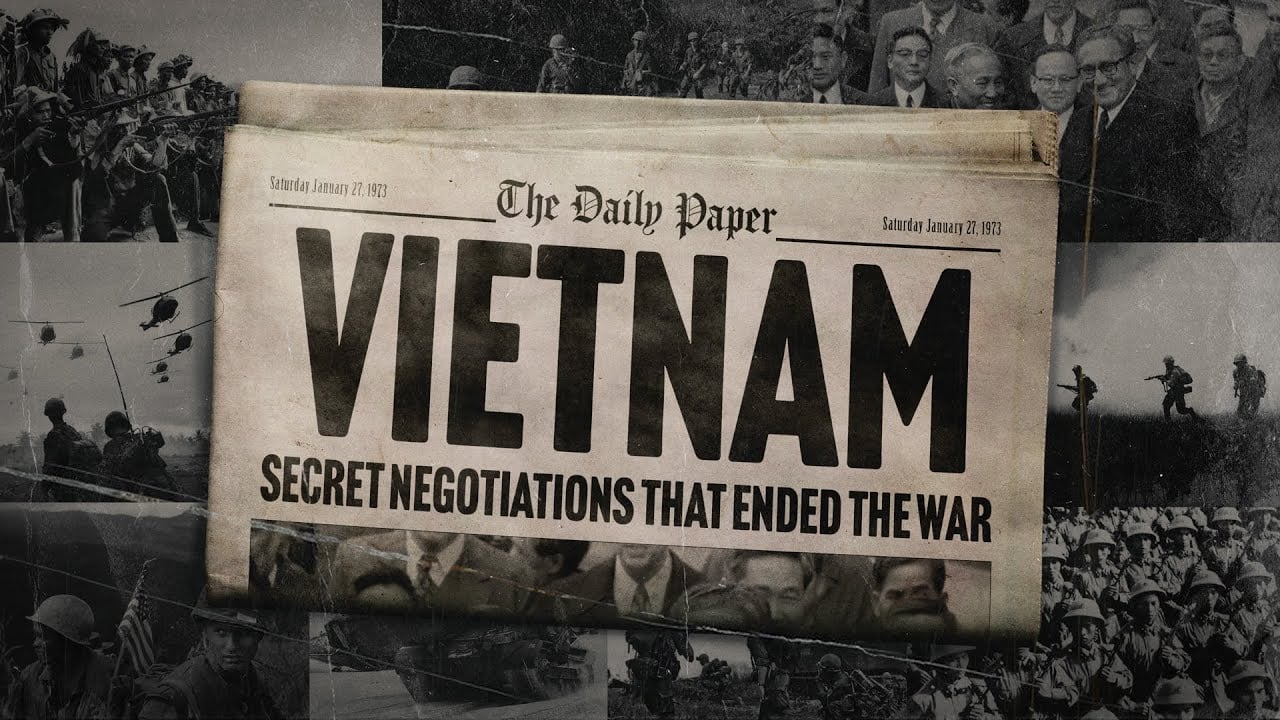
In July 1971, Henry Kissinger disappeared during a diplomatic visit to Pakistan. Publicly, he was said to be ill. In reality, Pakistan quietly facilitated his secret trip to Beijing, helping open the path to one of the most consequential geopolitical shifts of the twentieth century. The lesson was uncomfortable but enduring: some of history’s biggest negotiations only become possible once they leave the public stage.
Public politics rewards performance, not compromise
Modern diplomacy creates a misleading image of how negotiations actually work. Governments prefer visible summits, televised handshakes and carefully staged announcements because public diplomacy looks decisive and politically rewarding.
Real negotiations are usually the opposite.
Compromise is politically dangerous in public. Leaders are judged through headlines, television clips and social media reactions long before agreements mature. Under those conditions, flexibility begins to look like weakness. Governments therefore become trapped by their own rhetoric before serious bargaining even starts.
This is why backchannels continue to matter.
A recent discussion with Professor Owen Darbishire, Director Oxford Programme on Negotiation, touched on this reality while examining crisis diplomacy and strategic communication. The point is larger than any single conflict. Some of the world’s most important agreements only became possible because leaders first created private space to test compromise away from public pressure.
The Oslo Accords emerged from secret meetings in Norway before Israelis and the Palestine Liberation Organization could publicly acknowledge one another. The Good Friday Agreement depended on years of unofficial contact involving British officials, Irish intermediaries and actors publicly treated as untouchable. During the Cuban Missile Crisis, the United States and Soviet Union quietly negotiated the removal of American missiles from Turkey while publicly presenting the crisis as a Soviet retreat from Cuba. The Turkish dimension remained hidden for years because public politics on both sides could not absorb compromise honestly.
“Diplomacy often succeeds privately before it survives publicly.”
Pakistan understands backchannels better than it admits
Pakistan’s strategic geography has forced it to operate in ambiguity for decades. Bordering Iran, Afghanistan, India and China while maintaining relationships with Gulf states and the United States requires a political culture comfortable with contradiction.
That reality has quietly shaped Pakistani diplomacy more than official speeches often acknowledge.
The Kissinger-China opening is the clearest historical example. Pakistan did not merely host discussions. It became the conduit through which Washington and Beijing established trust carefully enough to avoid public political backlash. Without that secrecy, the opening may have failed before it even began.
Yet Pakistan still misunderstands one important distinction: access is not the same as leverage.
Pakistani discourse often exaggerates moments of diplomatic visibility into evidence of global influence. A mediation role, intelligence contact or strategic conversation quickly becomes framed domestically as proof that Pakistan has regained decisive international importance. That interpretation is emotionally satisfying but analytically weak.
Being present in negotiations does not mean controlling them.
This distinction matters today. Pakistan’s recent involvement in regional de-escalation efforts has increased diplomatic visibility. But visibility alone does not create long-term influence. States become strategically important when they can shape outcomes consistently, not when they temporarily facilitate communication between stronger powers.
There is also a deeper institutional problem. Pakistan often performs diplomacy tactically rather than structurally. Relationships depend heavily on personalities, crisis moments or military channels instead of durable institutional expertise. That weakens continuity.
Countries that succeed in complex diplomacy usually build long-term systems underneath public politics: specialist negotiators, strategic patience, policy consistency and institutional memory. Pakistan still struggles to sustain these capacities across political transitions and internal instability.
“Pakistan’s problem is not entering important rooms. It remains important once the room changes.”
The real test is institutional discipline
For Pakistan, the lesson is not that all serious diplomacy must remain secret. The lesson is that private access only matters when a state has the institutional capacity to use it.
Backchannels can reduce pressure, test ideas and prevent public rhetoric from killing compromise too early. But they can also create illusions. A country may believe it is shaping events when it is only carrying messages between stronger actors.
That is the danger Pakistan must avoid.
The challenge is no longer simply whether Islamabad can enter difficult conversations. Its geography almost guarantees that it will. The harder question is whether Pakistan can turn moments of access into durable influence through expert negotiators, policy continuity and disciplined statecraft.
Secret diplomacy opens doors. It does not guarantee that a country knows what to do once it is inside.