The real lesson of Bandar Abbas is not only that ports move trade. It is that the same port which feeds an economy can become its most dangerous point of exposure during crisis.
The chokepoint is also about what enters
Most discussions of the Strait of Hormuz focus on what leaves the Gulf: oil, gas and global energy flows. That is only half the story. The sharper question is what enters through the same maritime system.
For Iran, this matters enormously. In a recent PGAN discussion, Zaur Hasanov, expert in connectivity and security, argued that Bandar Abbas is not simply another Iranian port. It is the logistical centre through which much of Iran's containerized trade, food supply and basic commodity movement passes. His central point was blunt: if Bandar Abbas is seriously disrupted, Iran cannot quickly replace it through smaller ports, rail corridors or land routes.
That is the real strategic lesson.
A port is not powerful because it has cranes and containers. It is powerful because an entire society quietly depends on what passes through it. Food, medicine, industrial inputs, fuel components and consumer goods are not abstract trade flows. They shape prices, public pressure and political stability.
Pakistan's situation is not identical to Iran's but the structural resemblance is uncomfortable. Pakistan's trade is heavily concentrated through Karachi and Port Qasim. If either faces serious disruption through conflict, sanctions pressure or maritime risk, inland systems would need to absorb the shock quickly. The honest question is whether they currently can.
This is why ports are not only gateways to opportunity. They are also points where pressure can enter the national system.
"A chokepoint is not only dangerous because it blocks exports. It is dangerous because it can interrupt what keeps society functioning."
Ports expose state capacity
The uncomfortable truth is that ports reveal how well a state actually works.
A serious port is not just a dock. It requires rail links, customs efficiency, trucking capacity, warehousing, cold chains, digital clearance systems, security coordination and energy reliability. If one part fails the whole system slows down.
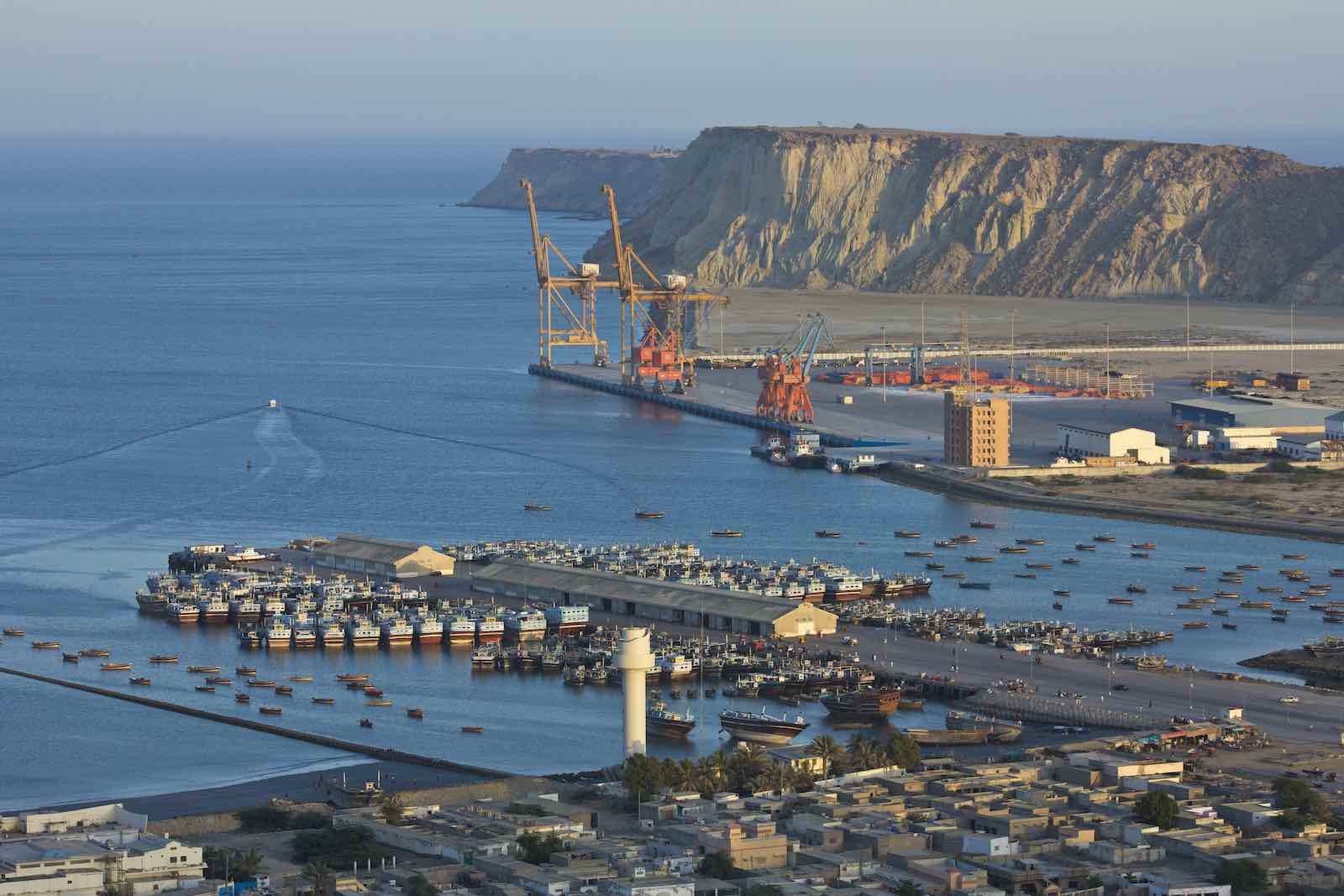
Pakistan's discussion of ports remains too shallow on exactly this point. Gwadar's location is real. Its long term potential is real. But strategic geography is not the same as operational capability. A port without reliable connectivity behind it cannot transform a country by itself.
Pakistan has heard the language of corridors for years. Yet corridors do not function because maps look attractive in presentations. They function when cargo moves predictably, cheaply and quickly. That requires boring institutional work: customs reform, railway capacity, road maintenance, cargo handling systems, port governance and predictable regulation. The Asian Development Bank's railway assessment for Pakistan noted that only a small fraction of Pakistan's imports and exports currently move by rail and that cross border freight has shifted toward roads because of rail capacity bottlenecks and limitations.
That single fact should change how Pakistan talks about connectivity.
If rail cannot carry trade efficiently, ports remain dependent on congested roads. If customs systems are slow, location loses value. If inland logistics are weak, maritime access becomes underused.
Pakistan's most serious port vulnerability is not the lack of coastline. It is the gap between strategic ambition and logistical discipline.
Strategic pressure now travels through supply chains
Ports have become strategic pressure points because modern conflict increasingly targets systems rather than territory alone.
Ukraine made this visible. Russian attacks on Ukrainian port facilities after Moscow withdrew from the Black Sea Grain Initiative were described at the UN Security Council as a threat to global food security especially for developing countries.
The point is not that Pakistan faces the same conflict. It does not. The point is that ports now sit at the intersection of war, inflation and public stability.
A disrupted port can raise food prices. It can delay industrial imports. It can increase insurance costs. It can reduce export competitiveness. It can create shortages before the public even understands where the pressure began.
A modern crisis may not begin with an attack on territory. It may begin with congestion, closure, sanctions pressure, maritime risk, insurance spikes or a temporary shift in shipping routes.
For a country already dealing with inflation, fiscal pressure and import dependence, logistics disruption is not a side issue. It is a political risk.
Connectivity must become statecraft
Pakistan does not need more port romanticism. It needs port realism.
Gwadar should not be sold as destiny. Karachi should not be treated as permanently sufficient. Port Qasim should not be discussed only in commercial terms. Each belongs to a wider strategic system that includes roads, rail, customs, industrial zones, energy security and regional diplomacy.
Iran's vulnerability is not simply that one port is important. Many countries have important ports. The vulnerability is concentration without enough flexible alternatives. Pakistan should ask itself a harder version of the same question. If one major port or trade route faces disruption, how quickly can cargo be rerouted? Are inland systems strong enough to absorb shocks? Can customs and rail adjust under pressure? Do policymakers know which imports are most sensitive to delay?
If the answer is unclear then the country does not yet have a serious port strategy. It has port infrastructure and strategic language but not enough logistical resilience.
Ports can create opportunity. They can also expose weakness. The countries that understand this will treat logistics as part of national power. The countries that do not will keep celebrating gateways without asking what happens when the gate becomes the pressure point.