Pakistan's climate vulnerability is often framed as a shortage of finance, infrastructure or technology. Yet the country's greatest obstacle may lie elsewhere. The ability to plan, coordinate and implement climate policy will ultimately determine whether Pakistan can adapt to a warming world.
The debate on climate change in Pakistan often focuses on what the country lacks. More financing. More renewable energy. More international support. These are all important. Yet they can also obscure a more difficult reality: Pakistan's climate challenge is increasingly less about access to solutions and more about the ability to implement them. The question is no longer whether Pakistan can access climate tools. The question is whether it can turn those tools into resilience.
Climate resilience is now an economic question
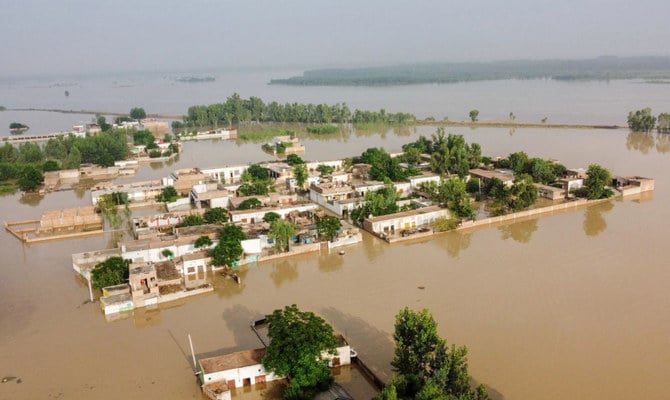
The devastating floods of 2022 demonstrated the scale of Pakistan's vulnerability. More than 30 million people were affected and economic losses ran into billions of dollars. Recovery efforts continued long after floodwaters receded. Similar pressures are emerging through prolonged heatwaves, declining water security and growing stress on urban infrastructure.
These are not simply environmental concerns. They are development challenges.
Climate shocks disrupt agricultural production, reduce labour productivity and divert scarce public resources toward reconstruction. Each major disaster weakens the state's capacity to invest in education, healthcare and economic growth. For a country already managing fiscal constraints, the costs of climate inaction continue to rise.
Technology can accelerate progress but it cannot replace institutions
The global energy transition has created new opportunities for developing countries. Renewable energy technologies have become cheaper, more accessible and easier to deploy than at any point in recent history.
China's role in this transformation has been particularly significant. It dominates global solar manufacturing, leads electric vehicle production and has invested heavily in battery storage technologies. For countries such as Pakistan, this creates opportunities to expand renewable energy capacity at lower cost. During a recent Pakistan Global Alumni Network podcast, Dr. Henry Wang Huiyao, Founder and President of the Center for China and Globalization (CCG), argued that future China-Pakistan cooperation could increasingly focus on green technology, renewable energy and climate resilience. His observation reflects how climate adaptation is becoming a central component of economic policy rather than a separate environmental agenda.
Pakistan has already experienced a surge in solar adoption. Businesses and households increasingly view solar energy as a practical response to rising electricity costs and unreliable power supply. This shift demonstrates how technological innovation can support economic resilience.
However, technology alone does not guarantee success. Many countries have acquired renewable technologies without achieving meaningful progress on climate adaptation or energy reform. Infrastructure can be built while governance remains weak. New technologies can be introduced without addressing the institutional barriers that limit their effectiveness. Climate resilience ultimately depends on the systems that manage these technologies rather than the technologies themselves.
The governance gap is becoming harder to ignore
Climate policy is often discussed through the language of investment and financing. Yet governance may be the more important variable.
Pakistan has produced numerous climate frameworks, adaptation plans and policy commitments over the past decade. The challenge has rarely been a lack of ambition. The challenge has been execution. Consider the National Flood Protection Plan, which outlined a comprehensive framework for early warning systems and river embankment rehabilitation. Yet a decade after its introduction, implementation across provinces remained uneven, with several key flood-monitoring stations either non-functional or without trained operators at the time of the 2022 disaster. This pattern is not exceptional. Responsibilities remain fragmented across institutions. Policy continuity is frequently disrupted by political transitions. Coordination between federal and provincial authorities often remains inconsistent.
These weaknesses become especially visible during crises. Disaster response frequently reveals gaps in preparedness, data management and institutional coordination. The result is a cycle in which governments repeatedly respond to climate emergencies rather than systematically preparing for them.
This is where climate resilience becomes inseparable from state capacity. Effective adaptation requires institutions capable of long-term planning, evidence-based decision making and sustained implementation. Without these foundations, even substantial investments struggle to achieve lasting impact. Countries that have strengthened resilience have typically paired technological investment with institutional reform. The two processes reinforce one another.
A climate strategy built around implementation
Pakistan's climate debate often centres on what external partners can provide. Financing, technology transfer and international cooperation will remain important. Yet a sustainable climate strategy must begin with domestic capacity.
This does not diminish the value of partnerships with countries such as China. On the contrary, future cooperation in renewable energy, flood management, water conservation and climate research could generate significant benefits. But these opportunities will only be realised if they are supported by institutions capable of planning, monitoring and delivering results.
The most important climate question facing Pakistan is therefore not how much technology it can acquire. It is whether the country can build the governance systems required to use that technology effectively.
Climate change is often presented as an environmental crisis. In Pakistan, it is increasingly a test of institutional capability. The countries that navigate the coming decades most successfully will not necessarily be those with access to the most advanced technologies. They will be those that can translate resources into results and policy into implementation. Pakistan's climate future will depend on whether it can do the same.