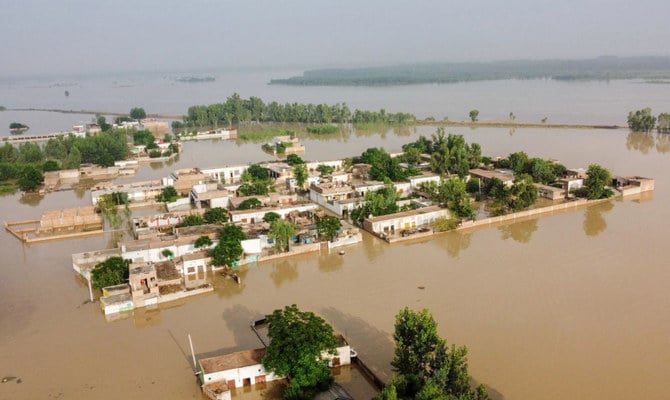
Pakistan’s 2022 floods were among the most devastating in the nation’s history, affecting over 33 million people and causing economic losses exceeding USD 30 billion. Recovery since then has centered on rebuilding dams, canals, and reservoirs, while integrating climate adaptation, AI-based water management, and community-driven resilience strategies. Through strong policy coordination, public–private partnerships, and inclusive initiatives, Pakistan is transitioning from reactive disaster response to proactive, climate-smart water governance—laying the foundation for a water-secure and resilient future.
Rebuilding Water Infrastructure and Climate Resilience
In the wake of the floods, Pakistan accelerated investments in resilient water infrastructure. The Water and Power Development Authority (WAPDA) is leading projects to add 10 million acre-feet of water storage by 2030, while rehabilitating aging dams and canals under initiatives like the Sindh Flood Emergency Rehabilitation Project. These efforts protect farmlands, improve irrigation, and strengthen hydropower security, ensuring sustainable growth and climate resilience.
Climate Adaptation in Flood-Prone Regions
Flood-prone regions across Khyber Pakhtunkhwa, Sindh, and South Punjab are adopting adaptive measures such as flood-tolerant crops, raised-bed farming, and strict zoning laws. In Buner and Shangla, early warning systems are now equipped with automated weather and river-level sensors serving 1.6 million residents. These tools exemplify Pakistan’s shift toward predictive preparedness and community resilience.
Government-Led Flood Recovery Framework
The Resilient Recovery, Rehabilitation, and Reconstruction Framework (4RF) was launched to align national and provincial strategies for short-, medium-, and long-term recovery. With support from the Asian Development Bank and the World Bank, Pakistan is implementing multi-billion-dollar programs to rebuild livelihoods, restore critical infrastructure, and modernize water security governance.
Empowering Communities for Flood Resilience
Community-led recovery remains central to Pakistan’s long-term adaptation. Grassroots projects supported by the Heritage Foundation of Pakistan have enabled women in Sindh to build eco-friendly, flood-proof homes and lead water-management committees. Similarly, inclusive public-works programs empower widows and persons with disabilities to help rebuild local access roads and drainage networks, reinforcing local ownership and sustainability.
Harnessing Technology for Water Management
AI-powered systems now forecast floods with precision, integrating satellite data and real-time sensors across the Indus Basin. WAPDA’s initiatives in smart water monitoring and digital mapping are helping optimize resource use while mitigating flood impacts. These innovations mark a crucial evolution toward data-driven climate governance.
The Path Forward: A Water-Resilient Pakistan Beyond 2025
Pakistan’s recovery journey from 2022 to 2025 has laid a solid foundation for long-term water resilience. Continued collaboration among government bodies, the private sector, and local communities will be essential to maintain progress. By investing in green infrastructure, sustainable agriculture, and digital innovation, Pakistan can secure a future where its people and ecosystems thrive in harmony with nature.