The world's most technologically ambitious countries did not begin with technology alone. They began with imagination. Before societies build artificial intelligence, space programs, biotechnology or advanced scientific industries, they usually spend years imagining those futures through stories, films, books and public culture.
Pakistan still treats imagination as secondary. That may become one of its most expensive mistakes.
Every technological leap begins as a story
Before the United States put astronauts on the moon, it spent decades producing science fiction that normalized space exploration in public imagination. Long before Silicon Valley became a global force, American culture had already popularized futuristic technologies through writers like Isaac Asimov and Arthur C. Clarke and later through films such as 2001: A Space Odyssey and Star Trek.
This was not accidental entertainment.
Science fiction quietly trained generations to think beyond existing limitations. It made scientific ambition emotionally exciting. It created curiosity before it created engineers.
The same pattern appears elsewhere.
China now invests heavily in science fiction because Chinese policymakers increasingly recognize the relationship between imagination and innovation. In 2023, China's box office success The Wandering Earth 2 became both a commercial hit and a symbol of China's growing confidence in futuristic storytelling. Chinese officials and academics have openly discussed science fiction as a way to cultivate technological imagination and national confidence.
South Korea followed a similar trajectory. The 1990s Korean Wave began as a deliberate cultural policy after the 1997 financial crisis when the government identified creative industries as a strategic investment. Films, television dramas and music were not treated as entertainment alone but as exports that built national confidence and projected technological modernity. That cultural investment helped create a society that believed it could shape modernity rather than merely import it. Samsung, Hyundai and Korea's digital industries emerged from that same shift in national self-perception.
Pakistan has not developed that mindset at scale.
This is not because Pakistan lacks intelligence. Pakistani students consistently excel internationally when given opportunity. The deeper issue is that Pakistan's public imagination remains dominated by reaction instead of exploration.
"Societies rarely build futures they cannot first imagine."
Pakistan discusses survival more than possibility
Pakistan's national conversation is overwhelmingly crisis driven.
Politics revolves around instability. Television debates revolve around outrage. Public discourse is trapped between inflation, elections, institutional conflict and security crises. Even education often rewards memorization over experimentation.
This creates a subtle psychological effect. A society constantly reacting to immediate pressure gradually loses the habit of imagining long term futures.
That matters more than it appears.
The countries shaping artificial intelligence, biotechnology and advanced manufacturing are not simply wealthier countries. They are countries culturally comfortable with thinking decades ahead. Their schools, films, books and research environments encourage speculation about what society could become.
Pakistan rarely does this seriously.
In a recent PGAN discussion, legal scholar, novelist and public intellectual Dr. Osama Siddique argued that societies which neglect science fiction often neglect scientific imagination more broadly. He connected this directly to curiosity, education and the ability of societies to inspire future generations toward science and innovation.
That observation cuts deeper than literature.
A child repeatedly exposed to stories about technological discovery, scientific ethics or future societies begins developing intellectual curiosity differently from a child raised entirely within narratives of fear, decline or survival. One imagination expands. The other contracts.
Pakistan's problem is not simply weak scientific infrastructure. It is weak futurist culture.
Speculative thinking is a strategic skill
One reason speculative fiction matters is because it trains societies to think in systems rather than isolated events.
Artificial intelligence is not only a software issue. It affects labor markets, law, education, surveillance, media and political power simultaneously. Climate change is not merely an environmental issue. It affects migration, agriculture, water systems and urban stability. Biotechnology raises questions about ethics, inequality and governance.
These problems cannot be understood through narrow thinking.
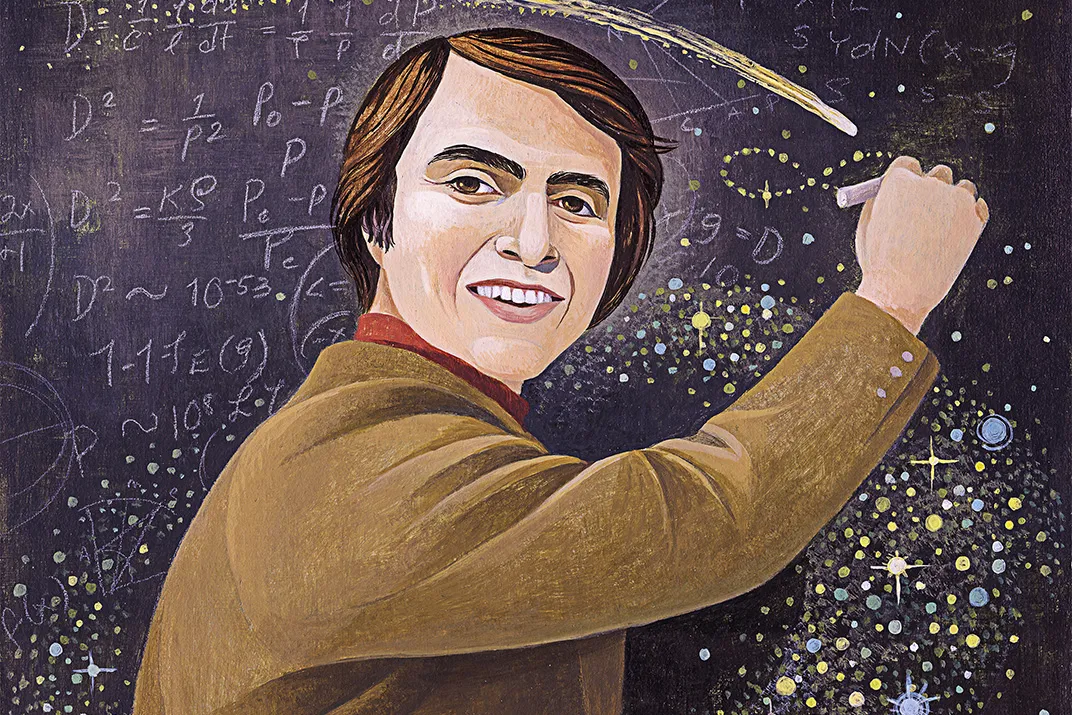
Strong science fiction forces societies to explore these intersections before reality makes them unavoidable. Orwell's 1984 helped readers recognize authoritarian patterns long before modern digital surveillance emerged. Black Mirror examines how technology reshapes behavior, relationships and political culture. Even Carl Sagan's Cosmos inspired generations toward scientific curiosity by making complexity emotionally accessible.
Pakistan rarely produces comparable narratives.
This absence matters because imagination influences confidence. A country repeatedly consuming futures imagined elsewhere slowly internalizes the idea that innovation belongs naturally to other societies.
That psychological dependency becomes dangerous over time.
Pakistan already struggles with intellectual insecurity. Many young Pakistanis assume cutting edge science, research and technological leadership belong fundamentally to the West or East Asia. Yet historically, the broader Muslim world and South Asia contributed enormously to mathematics, astronomy, medicine and scientific inquiry. That capacity did not disappear. It was displaced by colonial disruption, institutional decline and a culture that stopped rewarding curiosity. Recovering it is not about nostalgia. It is about recognizing that the foundation for ambition already exists.
The issue is not civilizational capability. The issue is cultural direction.
A society that stops imagining eventually becomes dependent
There is another danger in losing a futurist imagination. Societies trapped entirely in present crises become easier to technologically dominate.
If a country does not seriously think about artificial intelligence, others will define the rules for it. If it does not imagine climate futures, it will react to environmental shocks designed elsewhere. If it does not cultivate technological ethics, imported systems will quietly shape public behavior without local scrutiny.
This is already happening globally.
The most powerful countries today are not only producing technology. They are producing the stories surrounding technology. They influence how societies imagine progress, security, identity and even human relationships.
That is a form of power.
Pakistan does not need superficial nationalism disguised as science fiction. It does not need propaganda films pretending development problems do not exist. What it needs is something more serious: a culture comfortable asking difficult questions about the future without collapsing those questions into ideological panic or political tribalism.
The future is not built only inside laboratories, ministries or technology parks. It is also built inside classrooms, novels, films and public imagination long before institutions catch up.
The countries winning the future understood this early. They invested not only in technology but in the cultural confidence required to imagine worlds that did not yet exist.
Pakistan still has the talent to participate in that future. The harder question is whether it can rebuild the imagination necessary to believe it belongs there.