Most people think influence looks obvious. They imagine propaganda posters, political speeches or governments aggressively promoting ideology abroad. But the most powerful forms of modern influence rarely feel political at all. They arrive through entertainment, aesthetics, habits and aspiration. By the time people recognize the influence, they have often already changed parts of themselves around it.
That is what makes soft power so effective.
South Korea exported more than entertainment
South Korea's global rise is one of the clearest examples of modern soft power. Twenty years ago, few people outside East Asia consumed Korean music, television or beauty culture at a global scale. Today Korean dramas, K pop, skincare routines, fashion aesthetics and beauty standards influence millions of people across continents.
This transformation was not accidental.
The South Korean government invested heavily in cultural industries after the Asian financial crisis of the late 1990s, recognizing entertainment as both an economic and strategic asset. According to the Korea Foundation, the global Korean Wave audience exceeded 225 million people across more than 100 countries by 2023.
But the real significance of Korean soft power is not that people watch Korean dramas. It is that people slowly begin adjusting themselves around the culture they consume.
Young people across the world increasingly imitate Korean fashion, dieting habits, skincare routines, hairstyles and beauty standards. Korean cafés, cosmetics and aesthetics have spread far beyond Korea itself. In many countries, including Pakistan, Korean culture now shapes parts of urban youth identity despite the absence of any direct political campaign.
That is the deeper mechanism of soft power.
"The strongest influence is often the kind people voluntarily imitate."
Beauty standards are becoming globalized
One reason Korean influence matters is because beauty standards are no longer remaining local.
Social media has accelerated the globalization of aesthetics. Instagram, TikTok and YouTube repeatedly expose users to similar visual ideals until those ideals begin feeling normal. Korean beauty culture fits perfectly into this environment because it combines discipline, visual precision and highly polished presentation.
In Pakistan, this shift is increasingly visible.
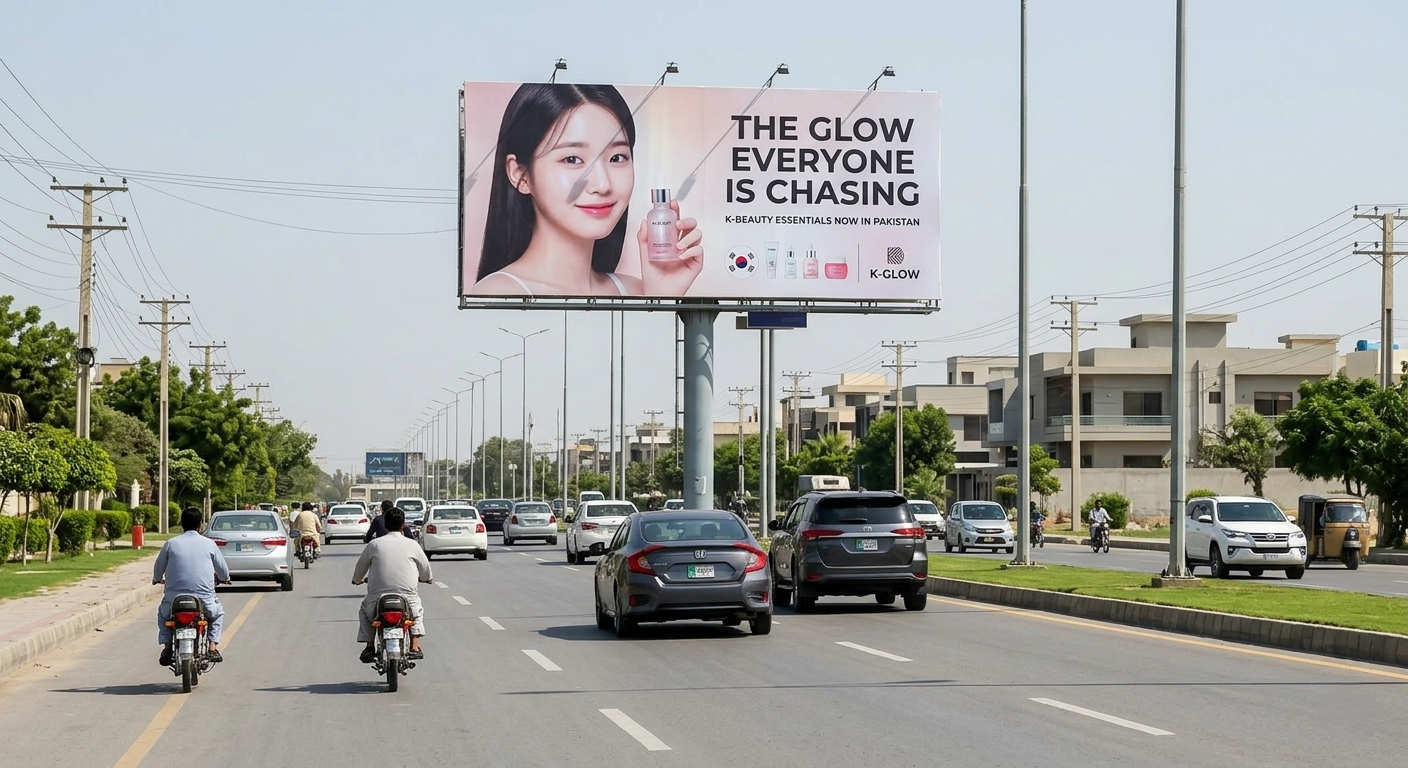
Urban salons advertise Korean skincare treatments. Young Pakistanis discuss "glass skin" routines online. Korean hairstyles and fashion aesthetics appear across TikTok and Instagram. Cosmetic products influenced by Korean branding dominate portions of the beauty market. Even male grooming culture has started changing quietly under similar influence.
Soft power changes aspiration. It shapes what people unconsciously begin associating with attractiveness, sophistication and modernity. Once that happens repeatedly, local standards slowly begin reorganizing themselves around imported ideals. This does not mean Pakistanis are abandoning their identity and it does not mean Korean culture is harmful by definition. The issue is more subtle than either of those reactions. It is that aspiration itself is being quietly redirected without any formal instruction.
This process often occurs quietly enough that societies barely notice it happening.
Attraction is more powerful than coercion.
The reason soft power works so effectively is because it bypasses resistance.
People resist pressure. They rarely resist aspiration.
Military power forces compliance. Soft power encourages imitation. One creates obedience. The other creates admiration. That difference matters because admiration often travels deeper into society than coercion ever can.
In a recent PGAN discussion, propaganda and public diplomacy expert Dr. Etienne Augé noted that modern influence increasingly operates through culture, media and public diplomacy rather than through direct force alone. His broader point was that the most durable form of influence is the kind a society absorbs willingly because it has come to associate the source with something desirable.
South Korea demonstrates this perfectly.
Korea's influence today extends far beyond economics or security. Korean culture has made South Korea feel modern, desirable and globally relevant. That emotional perception shapes tourism, consumption, education and even personal identity choices in countries geographically and politically distant from Korea itself.
Pakistan experiences this not only with Korea but through multiple external cultures simultaneously. Turkish dramas influence perceptions of family and masculinity. Western media shapes ideas of success and lifestyle. Gulf influence shapes religious aesthetics and social expectations. Indian entertainment still affects language, humor and wedding culture across South Asia despite political hostility. Each of these streams arrives not as ideology but as entertainment and each quietly deposits assumptions about what is normal, desirable or aspirational.
Modern societies increasingly absorb outside influence continuously through screens. The scale and speed of that absorption is historically unprecedented. Previous generations encountered foreign culture occasionally and partially. Today it is constant and immersive which means the soft power operating on any given society is far more layered and harder to track than older models of cultural influence assumed.
Soft power also creates insecurity
This is where the discussion becomes more complicated.
The globalization of beauty and lifestyle standards can create anxiety as well as admiration.
South Korea itself struggles with intense beauty pressure. Cosmetic surgery rates remain among the highest in the world and social expectations around appearance can become psychologically exhausting. The same standards that make Korean aesthetics globally influential can also produce insecurity within Korean society itself.
When these ideals spread internationally through social media, they often arrive detached from cultural context. Young people consume polished perfection without understanding the pressures underneath it.
Pakistan is vulnerable here because social media already amplifies insecurity aggressively. Filters, edited lifestyles and algorithm driven beauty culture constantly reshape how people evaluate themselves and others. Korean aesthetics enter an environment already saturated with comparison culture.
This does not mean societies should reject foreign culture. Cultural exchange is normal and often enriching. Pakistan itself benefits when its music, food, fashion or art travel internationally.
The real issue is whether societies remain conscious of how influence operates.
Soft power is most effective precisely because it does not feel forceful. No one is ordered to imitate another culture. People choose to do it willingly because the culture becomes associated with attractiveness, success or modernity.
That is why soft power changes people before they notice it.
The countries most capable of shaping global culture understand this deeply. They know influence today is not only about armies, sanctions or speeches. It is also about aspiration. The societies that become globally desirable eventually begin shaping how other societies dress, speak, consume, dream and evaluate themselves.
And once that process begins, influence no longer stays at the level of politics. It quietly enters identity itself.